One Extra Socket, Many Questions: What a Simple Addition Can Reveal About Your Home's Wiring

Photo: UK electrician inspecting socket outlet wiring in home, via facts.net
Adding one socket outlet sounds like a modest job: drill a hole, run a cable, fit a box and connect it. In practice, the request opens a series of questions about the existing circuit, the protective device, the earthing arrangement and the condition of the wiring. Those questions are not a way of inflating the job. They are how a qualified electrician decides whether the new socket can be added safely, and whether the existing installation is able to support it.
Why one socket is rarely one hole
Every new socket has to be supplied by a cable, protected by a device and connected to the earthing system. The electrician must know what kind of circuit is already there. Many UK homes have ring final circuits, where a 2.5 mm² twin and earth cable forms a loop and is protected by a 32 A device. Others have radial circuits, which may be protected at 20 A or 32 A depending on cable size and design. A ring final and a radial behave differently, and the rules for adding a socket to each are different.
On a ring final circuit, an unfused spur may generally supply one single or one twin socket outlet, connected to a socket or junction box on the ring. A spur from a spur is not acceptable, and a fused connection unit may be needed where more than one outlet is supplied. On a radial circuit, the existing cable size, protective device and load all need checking before an extra socket is added. The location matters too: a socket in a kitchen, bathroom, utility room or outdoors brings additional requirements for RCD protection and suitable accessories.
The questions a qualified electrician asks before quoting
A proper quotation often begins with questions that may seem detailed. Is the existing circuit a ring or a radial? What is the rating of the protective device? What size are the cables, and how are they routed? Is there RCD or RCBO protection? Is the main earthing and protective bonding adequate? Is there spare capacity in the consumer unit? Will the cable pass through insulation, joists or a restricted space where its current-carrying capacity must be adjusted? Is the work notifiable under Building Regulations Part P in England and Wales?
These questions affect the price because they affect the work. A socket added to a sound ring final in a straightforward position is one thing. A socket added to an older radial circuit with no RCD protection, limited earthing and a cable route through thermal insulation is another. The electrician is not being difficult by asking. They are establishing whether the new outlet can be connected without creating a hidden weakness.
Earthing and bonding: the unseen safety net
Earthing gives fault current a low-resistance path back to the source so that a protective device operates quickly. Main protective bonding connects incoming metal water, gas and oil services to the earthing system, and supplementary bonding may be required in some locations. If earthing or bonding is inadequate, adding a socket can expose the household to a greater risk during a fault. An electrician may therefore need to improve the earthing or bonding before the new socket is commissioned and certified.
Older cable colours are another clue. Cable with red and black conductors predates the harmonised brown and blue colours used from the mid-2000s, although the changeover was not instant on every site. Red and black cable is not automatically unsafe, but it is a reminder that the installation may be older and should be inspected rather than assumed to be sound. Rubber-insulated cables, perished flex, fabric-covered leads or cables with no reliable earth connection need particular attention.
Spurs, joints and the cowboy shortcut
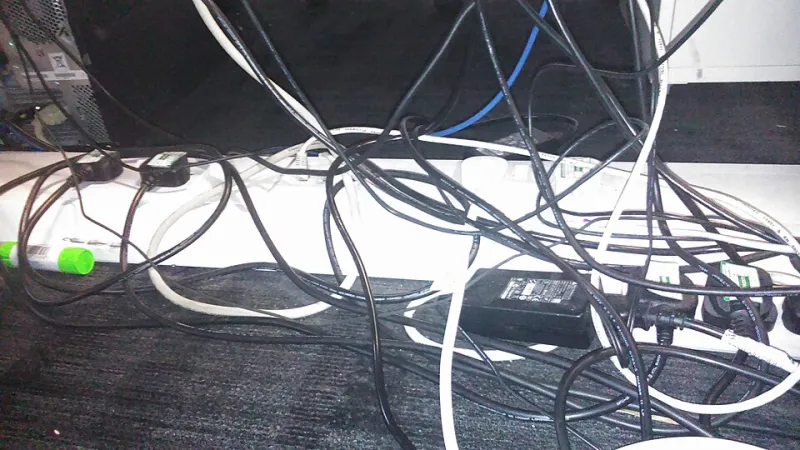
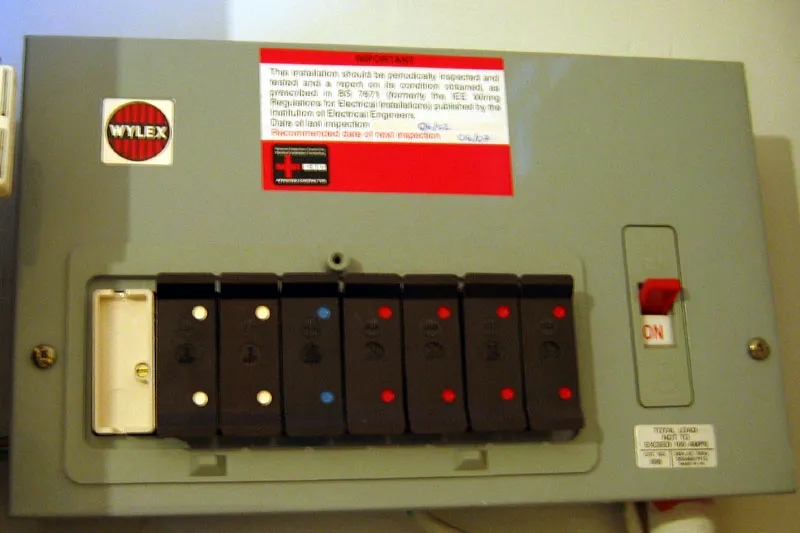
A small socket job can reveal hidden joints, connector blocks wrapped in tape, cables buried without protection, missing grommets or a spur taken from another spur. These shortcuts may work for a while, but they can overheat, loosen or fail under load. The electrician may also find that the consumer unit has no spare way, that the existing protective device is not suitable for the new cable, or that a circuit already carries more load than its design allows.
Good work is not just neat work. It includes testing before and after the alteration, checking polarity, continuity, insulation resistance, earth fault loop impedance and RCD operation where applicable. The homeowner should receive the appropriate certificate, such as a Minor Electrical Installation Works Certificate for an alteration, or an Electrical Installation Certificate where the work is more extensive. In England and Wales, notifiable work under Part P should be notified through the local authority or a registered competent person scheme.
What a reassuring, honest quote looks like
An honest quote may include an investigation allowance, testing and the possibility of remedial work. It may also state that the existing circuit is unsuitable until a particular issue is addressed. That is not a sign of a bad electrician; it is a sign that the person quoting has considered the whole installation rather than just the hole in the wall. A suspiciously cheap quote that excludes testing, certification or earthing checks is rarely the bargain it appears to be.
Before work starts, ask what will be tested, what certificate will be issued and whether the work is notifiable. A qualified electrician should be willing to explain the answers in plain language. If the findings are more serious than expected, ask for photographs and a clear explanation of the options. The aim is not to turn every socket job into a full rewire, but to make sure the new outlet does not sit on top of a hidden problem.
A small job with a useful health check
Adding a socket is a practical improvement, especially in older UK homes where outlet provision can be modest. It is also a chance to check the circuit that will supply it. When an electrician asks about ring finals, radials, spurs, earthing and cable colours, those questions are protecting the household. Jaydee Electrical would rather have that conversation before the cable is run than discover the shortcut afterwards.