Five Free Electrical Habits That Quietly Protect a UK Home
Good habits, no invoice
Much of the advice given to homeowners about electrical safety involves expenditure: a new consumer unit, additional socket outlets, an inspection and testing visit. All of that has its place. Yet a substantial proportion of the electrical problems seen in UK homes arise from ordinary patterns of use rather than from defective installation work, and those patterns can be changed today at no cost whatsoever. What follows are five habits worth adopting. None of them requires tools, and none of them demands anything more than a small adjustment to routine.
1. Feel plug tops and socket plates by hand
When you switch an appliance off, place the back of your fingers briefly against the plug top and the socket plate. They should be no warmer than the surrounding room. A plug that feels noticeably warm in normal use is telling you something: the contact between the fuse carrier and the plug pins, or between the plug and the socket, may be deteriorating, and resistance at a poor connection produces heat. Heat leads to discoloured plastic, and discoloured plastic is the stage before failure.
This takes two seconds and requires no equipment. It is particularly worthwhile with appliances that run for long periods, such as tumble dryers, washing machines and space heaters.
2. Resist the daisy chain
Extension leads are convenient, and a single one used within its rating is perfectly acceptable. Problems arise when one lead is plugged into another so that four appliances eventually share one wall socket through a chain of adaptors. The 13 A fuse in the first plug protects the flex of that extension lead, but it cannot protect the second, third or fourth lead in the sequence, and the total current drawn is often far higher than the arrangement was ever intended to carry.
A simple discipline works well: no more than one extension lead per socket outlet, and a mental note that the combined load of everything plugged into it matters more than the number of sockets on the bar. High-draw items such as kettles, heaters and irons are best kept on wall sockets.
3. Close the outdoor socket cover when it is not in use
Outdoor socket outlets are rated for weather exposure, but the rating assumes the flap is closed when nothing is plugged in. A lid left open allows rain, driven moisture, garden grit and insects into the enclosure, and the result is often corrosion on the contacts that only becomes apparent when a mower or hedge trimmer is connected the following spring. Closing the cover is a single movement, and it materially extends the working life of the accessory.
It is also worth checking, once or twice a year, that the flap springs shut properly and that the enclosure is not cracked.
4. Know where the main isolator switch is and how to use it
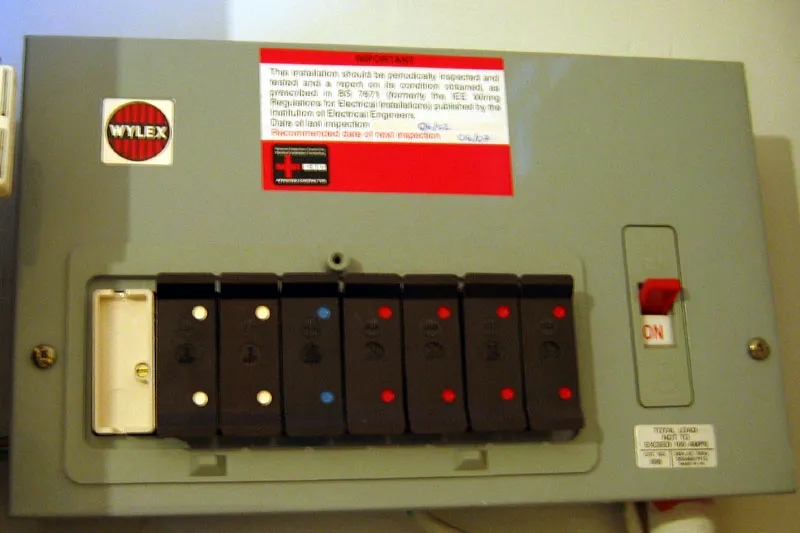
In an emergency the difference between a minor incident and a serious one is often measured in seconds. Every adult in the household should be able to point to the consumer unit, identify the main switch, and know that switching it off will de-energise the installation. Locate it now, in daylight, when nothing is wrong, and note whether access is obstructed by stored items.
If the board is in a cupboard behind boxes, move the boxes. If it is labelled poorly, consider re-labelling it. Should a plug, flex or appliance begin smoking or sparking, the correct response is to isolate at the main switch if it can be reached safely, and to call for assistance rather than to investigate with bare hands.
5. Unplug the high-draw appliances after use
Appliances that combine a heating element with a motor, such as tumble dryers and washing machines, are the ones most often implicated in household fires. Unplugging them when they are not in use removes the small but genuine risk of a fault developing in the appliance or its supply while nobody is present, and it also eliminates standby consumption. The same applies to portable heaters and to chargers left running overnight.
There is a practical limit here, since built-in ovens and similar appliances are not easily unplugged, and the habit is not intended to become an inconvenience. Where an appliance is on a plug and is simple to disconnect, making that a routine is a reasonable default.
Why small routines add up
None of these five habits is dramatic, and individually each prevents only a narrow category of problem. Taken together, however, they cover loose connections, overloaded extensions, moisture ingress, delayed isolation in an emergency, and unattended appliance faults. That is a substantial share of the avoidable incidents that occur in domestic properties.
Where habit ends and inspection begins
Good routines complement a sound installation; they cannot compensate for one that is defective. If an appliance repeatedly blows a fuse, if a socket remains warm after being checked, if a circuit trips without explanation, or if the consumer unit has no residual current protection, the matter requires a qualified electrician rather than a change of routine.
Adopting one or two of the habits above this week is a sensible start. If you would like reassurance about the wider condition of your installation, Jaydee Electrical is happy to advise on what is genuinely necessary and what can safely wait.