Bathroom Zones Without Guesswork: Fittings, Ratings and the Rules That Matter
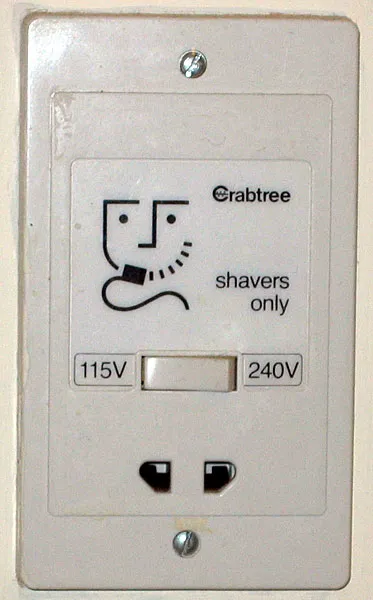
Photo: Secretlondon, CC BY-SA 3.0, via Wikimedia Commons
A bathroom is one of the few rooms in a UK home where electrical design is shaped as much by water and bare skin as by convenience. BS 7671 treats the room as a special location, and the zone system exists to keep equipment at a sensible distance from baths, showers and wash basins. The rules are not arbitrary. They reflect the reality that a person in a bath or shower is more vulnerable to electric shock, and that splashes, steam and condensation are normal conditions rather than accidents.
For homeowners planning a refit, the important point is that bathroom electrics are not a matter of choosing a stylish mirror light and hoping the electrician can make it work. The zone, the IP rating and the manufacturer's instructions all have to align before a fitting is suitable.
The zones in plain terms
Zone 0 is the inside of the bath or shower basin. Equipment here must be specifically designed for immersion and will normally be low-voltage SELV equipment with an appropriate IP rating. This is a narrow category. Most decorative bathroom fittings are not intended for it.
Zone 1 is the area directly above the bath or shower, extending to a defined height above the floor, and around the shower outlet. It is the splash zone in practical terms. Equipment must be suitable for the location, generally with at least IPX4 protection, and higher where water jets are likely. Manufacturer instructions remain decisive; a fitting marked for zone 2 should not be moved into zone 1 simply because it looks robust.
Zone 2 extends beyond zone 1 by a defined distance. It is less exposed than zone 1 but still close enough to water to demand care. IPX4 is commonly required, and the equipment must still be suitable for bathroom use. Outside the zones, ordinary domestic wiring rules apply, but that does not make a bathroom socket a good idea. Ordinary 13A sockets are not permitted in the bathroom zones, and the only usual socket exception is a shaver supply unit designed to the relevant standard.
IP ratings: useful, but not the whole story
An IP rating describes ingress protection. IPX4 indicates protection against splashing water; IPX5 indicates protection against water jets; IPX7 indicates protection against temporary immersion. The higher number is not automatically better for every position. A fitting may have a suitable IP rating but be unsuitable because it is not designed for bathroom use, because it requires a particular supply arrangement, or because the manufacturer prohibits installation in that zone.
This is why the instructions matter. A mirror light, extractor fan or downlight should be selected with the zone in mind and installed exactly as the maker specifies. Sealant around a fitting is not a substitute for correct IP protection, and silicone should never be used to cover poor workmanship.
What can legally live where
Shaver sockets are a special case. A shaver supply unit to BS EN 61558-2-5 uses an isolating transformer and is the recognised socket outlet for bathroom use. It is not a licence to install a standard 13A socket near a basin. Position it according to the zone rules and the manufacturer's instructions.
Mirror lights and illuminated cabinets need the correct IP rating and suitability for the zone. Metal-bodied fittings may require earthing, and integrated shaver sockets must be assessed in the same way as a separate shaver unit. A bathroom cabinet is not automatically suitable just because it is sold as a bathroom product.
Pull-cord switches are common because the switch mechanism can be mounted outside the zones while the cord remains operable from the bath or shower. The ceiling position still needs to be suitable, and the cord should not create a hazard. An electric shower requires its own dedicated circuit, a correctly rated protective device and an isolator arranged in line with the manufacturer's instructions. It should never be supplied from a lighting circuit or installed as a DIY add-on.
Extractor fans, heated towel rails and underfloor heating also need suitable ratings, correct circuit design and RCD protection where required. The common thread is that every item should be selected for the location, not simply for its appearance.
Why bathroom work is notifiable
In England and Wales, many electrical alterations in a bathroom are notifiable under Part P of the Building Regulations. New circuits, consumer unit changes and work in special locations fall within the notifiable scope, and a registered competent electrician can self-certify the work. Scotland has its own building standards system. The practical message for homeowners is simple: bathroom electrical work should leave a paper trail.
That paperwork matters at resale, at insurance renewal and when a later electrician inspects the installation. A receipt for a mirror light is not the same as a certificate for the circuit that supplies it.
DIY mistakes that surface at survey
Bathroom DIY errors are often easy to spot. A standard socket installed too close to a basin, a non-IP downlight above a shower, unsheathed cable passing through a zone, or a mirror light connected from a bedroom spur will all attract attention. So will a shower circuit with undersized cable, a missing RCD, poor earthing or protective bonding, and accessories sealed into place with silicone rather than properly fixed.
These issues are not merely technical. They can delay a house sale, complicate an insurance claim and add cost to a refit that was meant to be cosmetic.
A pre-refit checklist for older bathrooms
Before buying fittings, map the zones accurately and write down where the bath, shower and basin will sit. Check the consumer unit for RCD or RCBO protection and confirm the earthing and bonding arrangement. Identify the existing shower circuit and its rating rather than assuming it can be reused. Check the IP rating and manufacturer's instructions for every light, fan and accessory. Keep ordinary sockets out of the bathroom and use a shaver supply unit only where appropriate. Plan pull cords and isolators outside the zones. Use a registered electrician for the work and retain the certificate.
Bathroom electrics are reassuringly predictable when the zone map is drawn first and the fittings are chosen second. The reverse order is where most expensive surprises begin.