Warmth Without Guesswork: A Pre-Winter Check for Electric Blankets and Heated Throws
As colder evenings return, electric blankets and heated throws come outof storage and back into daily use. They are familiar, low-powered appliances, and that familiarity can encourage a rather casual approach. A short, methodical check before the first cold night of the season is a sensible habit. It does not require specialist equipment, and it is not a substitute for professional advice where something looks wrong. It is simply a way to separate normal wear from the warning signs that call for replacement or further investigation.
Begin with the label and the age
Before unfolding anything, locate the care label and any manufacturer instructions. Note the model, the recommended cleaning method and, where available, the date of purchase. Many electric blankets are designed with an expected service life, and some manufacturers suggest a figure in the region of ten years. That is guidance rather than a legal limit, but it is useful context. An older blanket with an unknown history, or one inherited with a second-hand bed, deserves particular caution. Heated throws follow the same principle: age, storage conditions and previous use all affect the condition of the internal heating elements and insulation.
If the label is missing and the age cannot be established, consider whether continued use is worth the uncertainty. Replacement is often the more measured decision.
Inspect the plug, cable and controller
Unplug the blanket before any inspection. Start at the plug and work along the cable. Check the pins for discolouration, scorching or looseness, and look at the point where the flexible cable enters the plug. A cable that is stiff, cracked, cut or worn through its outer sheath should end the check immediately. The same applies where the cable enters the controller and where it meets the blanket itself. These are flexing points, and they are where damage tends to appear first.
Examine the controller carefully. Look for cracks in the casing, signs of heat damage, sticking buttons or a loose cable gland. A controller that switches on and off intermittently, or one that feels unusually warm at the plug or connector, is not something to live with. Do not attempt to tape a damaged cable or repair a controller yourself. For the blanket itself, replacement is normally the safer and more practical answer.
Unfold the blanket and examine the fabric
Lay the blanket flat on a bed or floor in good light. Run a hand gently over the surface and check the edges, seams and tie tapes. Look for scorch marks, discolouration, worn patches, exposed heating wires, loose stitching or signs of damp. Any of these indicates that the blanket should not be used. Heat damage is not always dramatic; a small area of discolouration can be an early sign that the internal element or insulation has been compromised.
Storage creases matter as well. An electric blanket that has been tightly folded or stored under heavy items may develop concentrated folds in the heating element. When unfolded, inspect those areas closely. Follow the manufacturer's instructions on how the blanket should be folded or rolled for storage. A blanket should not be used folded, bunched or tucked in a way that the instructions do not permit.
Test carefully, on an RCD-protected socket
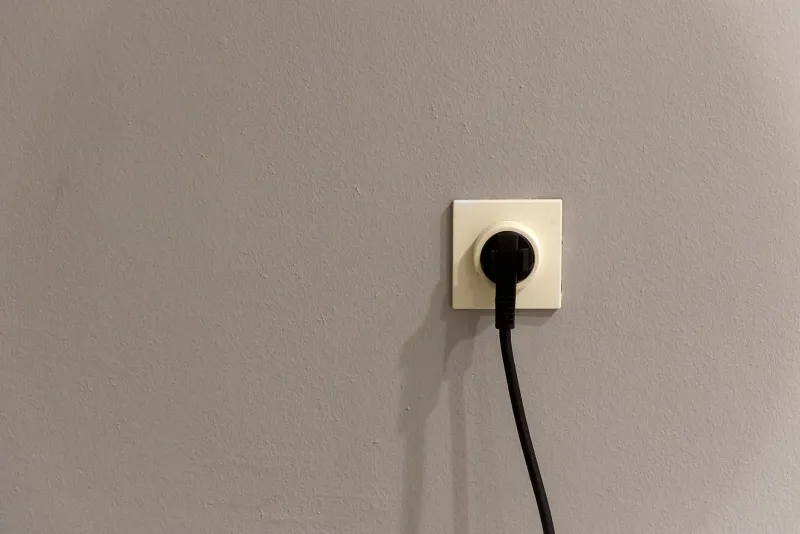
If the visual checks are satisfactory, plug the blanket into a socket that is protected by a residual current device, commonly known as an RCD. Many modern consumer units provide this protection, and a plug-in RCD can be used where appropriate. An RCD does not replace careful inspection, but it adds a useful layer of protection against earth leakage.
Unfold the blanket completely and switch it on at the lowest setting. Observe it for a short period. The warmth should be even, with no obvious hot spots. There should be no smell of scorching, no buzzing or crackling, and no repeated tripping of the RCD. If the plug or connector becomes hot, or if the RCD trips, stop using the blanket and seek advice from a qualified electrician. Do not keep resetting the device to see whether it will settle down.
Avoid extension leads unless the manufacturer's instructions specifically allow them. Where an extension lead is unavoidable, it should be fully unwound and suitably rated, but the blanket's own instructions take priority.
Recognise when replacement is the safer answer
Replacement is usually the right response where there is any damage to the plug, cable, controller or fabric; where the blanket is older than the manufacturer's guidance; where heating is uneven; where there are scorch marks or exposed wires; or where the RCD trips during use. Do not rely on a repair carried out by an unqualified person. Electric blankets are not difficult to replace, and a new model with clear instructions is a more dependable route than attempting to extend the life of a deteriorating one.
Know when to call an electrician
An electrician is not normally needed to assess the blanket itself, but professional help is appropriate where the socket, plug or circuit is suspect. Warning signs include a plug or socket that feels hot, discoloured socket outlets, a burning smell near the socket, or an RCD that trips repeatedly. These point to the fixed installation rather than the blanket alone, and they should be investigated properly.
Store it well for the season ahead
At the end of winter, clean and dry the blanket according to the label, then store it loosely folded or rolled as instructed. Keep it away from damp and avoid placing heavy items on top. A little care at the end of the season makes the next pre-winter check quicker and more reassuring.
A few minutes spent on these checks is a small investment in comfort and safety. If anything raises doubt, retire the blanket rather than press it back into service. Where the concern relates to the socket or circuit, a qualified electrician can assess the installation and give clear advice.