Before the Boxes Go Up: An Electrical Appraisal of the Domestic Loft
The loft occupies an odd position in the domestic imagination. It is a room in the drawings, a void in practice, and a storage facility by convention. Most households ascend to it two or three times a year, usually in late autumn, carrying boxes and a torch. Very few ever look at what else is up there.
That is a reasonable position for a homeowner to take, and a poor one for a building to be left in. The loft contains a working part of the electrical installation — often the oldest, least supervised and most heavily insulated part of it — and the seasonal loading of the space with boxes is a sensible moment to look at it properly.
Why the loft warrants separate consideration
Every other part of a domestic installation is subject to incidental inspection. A socket in a kitchen is looked at daily. A consumer unit is glanced at whenever a breaker trips. A loft is visited rarely, is often unlit, and is frequently inaccessible without a ladder and a degree of determination.
Three conditions make the space more demanding than the rest of the house. First, thermal insulation: modern lofts are covered to a depth that would have been unimaginable when many of the cables beneath it were installed, and cable buried under insulation cannot dissipate heat as freely as cable clipped to a joist in free air. Second, temperature and vermin: lofts are warm, dry and undisturbed, which makes them attractive to rodents, and gnawed cable sheath is a familiar sight. Third, history: lofts have absorbed decades of informal alteration, from a single additional light to a spur run to a shed, often with no record kept.
None of this means a loft is dangerous by default. It does mean that the space deserves a periodic, structured look rather than an assumption that all is well because nothing has yet gone wrong.
The faults most often found above a ceiling
A visual inspection by a competent person typically turns up a familiar shortlist:
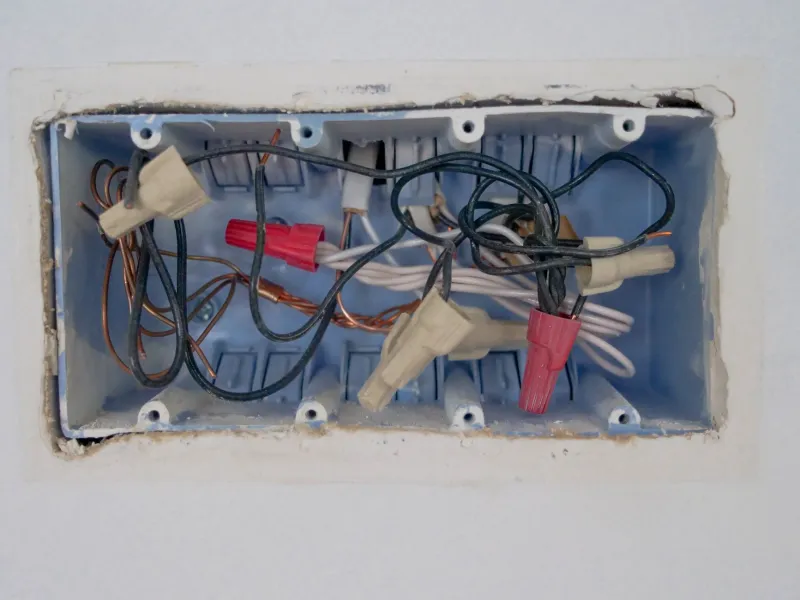
- Joints that cannot be reached. Connections enclosed in a box that has since been buried under boarding or insulation cannot be inspected, tested or maintained. BS 7671 requires that connections remain accessible for these purposes, and a joint hidden beneath a plywood floor is not.
- Cable compressed or covered. Cable trapped under boards, stapled too tightly, or run through insulation without any adjustment to its current-carrying capacity is cable operating outside its intended conditions.
- Improvised lighting. A single pendant on a length of flex, a transformer resting loose on insulation, or a lamp fitting with no enclosure at all are all common in older lofts.
- Rodent damage. Look for droppings, shredded insulation and sheath that has been chewed back to expose conductors. This is one of the more common causes of intermittent faults in older properties.
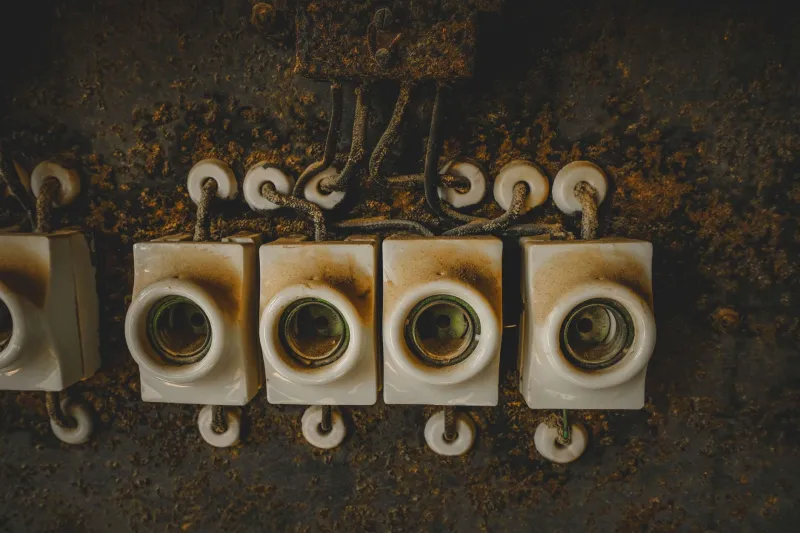
- Legacy cable types. Homes wired before the 1960s may still contain rubber-insulated or lead-sheathed cable in the loft, where it has been less likely to be replaced. Such cable becomes brittle with age and should not be assumed serviceable.
Lighting, insulation and the downlight problem
Recessed downlights are the recurring flashpoint in loft safety. A downlight designed for a ceiling void expects air around it. When the loft insulation is later topped up and laid over the fitting, that expectation is defeated. The result is a fitting running hotter than intended, in contact with combustible material, in a space no one watches.
Where downlights are present, insulation should be kept clear of them, and the fittings should be of a type rated for the installation conditions — some are designed to be covered, many are not. Loose transformers and junction boxes resting on or in insulation should be re-secured to a joist. If the lighting is old, poorly supported and of uncertain origin, replacement is usually the more sensible expenditure than repair.
Storing things without creating a hazard
The electrical installation and the storage function of a loft compete for the same floor area. A few ground rules keep the peace:
- Keep stored items clear of cables, boxes and fittings rather than stacking over or against them.
- Do not lay boarding directly onto cable runs. Where boarding is wanted, the cable routes should be established first and the cabling protected or re-routed.
- Keep insulation continuous but not compressed under heavy goods, and never tuck it around light fittings or equipment.
- Avoid storing anything that is itself a fire risk — paint thinners, gas cylinders, old aerosols — near electrical equipment.
- Leave a clear, lit route from the hatch to any equipment that may need attention.
A pre-winter routine in eight steps
- Isolate before touching anything. If any inspection requires contact with fittings or cable, the relevant circuit must be switched off and proved dead. Otherwise, keep the visit visual only.
- Take a bright torch and a camera. Photographs taken before the boxes go up are useful records and make changes easier to spot next year.
- Follow the cable routes. Establish where the lighting circuit runs and whether anything crosses the hatch or a walkway.
- Look for heat and rodent evidence. Discolouration at fittings, droppings, and chewed sheath are the three signals that justify calling an electrician rather than making a note.
- Check that joints are visible and enclosed. Any connection you cannot see is a connection nobody can maintain.
- Inspect the lighting. Confirm fittings are secure, enclosures are intact, and nothing combustible is in contact with them.
- Confirm the alarms. A loft fire is often detected late; ensure smoke and heat alarms elsewhere in the home are working and interconnected, since a loft is rarely within the protected circulation route.
- Record what you find. A dated note of the condition, with photographs, is a modest but genuinely useful document.
When professional help is the sensible option
An Electrician should be engaged where there is any evidence of overheating, where cable sheath has been damaged, where joints are inaccessible, or where the installation is to be extended, boarded over or converted. An Electrical Installation Condition Report is the appropriate instrument for establishing the condition of an ageing installation, particularly in a property that has not been inspected within the last decade or has changed ownership.
New circuits, and many alterations in England and Wales, fall within the scope of Part P of the Building Regulations and require notification. This is not a formality to be worked around; it is the mechanism by which the work is recorded and the householder protected.
A final word on records
The loft is where a house keeps its electrical history, usually untidily. Keeping a single folder — certificates, minor works notices, the last inspection report, and a photograph of the loft taken this November — turns a decade of guesswork into a two-minute read. Before the boxes go up, it is worth an hour of attention.