Heat Pumps and the Hidden Electrical Survey: Questions to Settle Before the Quote
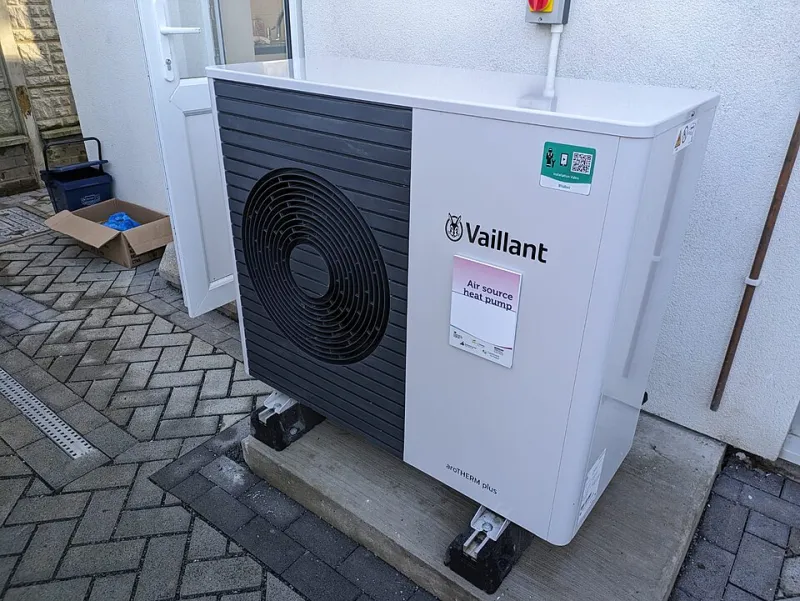
Photo: Southend-on-Sea Borough Council, UK, CC0, via Wikimedia Commons
An air-source heat pump or heat-pump hot water cylinder is usually presented as a heating project, but it is also an electrical project. A quotation may specify the outdoor unit, buffer vessel, cylinder and controls while leaving the supply upgrade, dedicated circuit or consumer-unit alteration as a provisional item. For homeowners, the safest time to resolve those points is before the quote is accepted, not during installation week.
Why the electrical survey belongs before the quotation
A competent heat-pump installer will survey the property, but the electrical capacity and routing need input from someone who can assess the installation against BS 7671. A quotation based only on heating demand can understate the electrical work, and two quotes may not be directly comparable if one includes a consumer-unit alteration and the other does not.
This is not a reason to treat every heat-pump project as complicated. Many homes can accommodate a heat pump with a well-planned dedicated circuit and modest consumer-unit work. The point is to establish which category a property falls into early, while there is still time to adjust the specification, programme and budget.
Start with the incoming supply, not the appliance
Most UK homes have a single-phase supply with an 80A or 100A cut-out fuse, although older arrangements vary. A heat pump is rarely the only significant load in a home. Electric showers, induction hobs, immersion heaters, EV chargers and outbuilding supplies may all contribute to the maximum demand.
Ask the installer and an electrician to calculate maximum demand using the diversity principles in BS 7671, rather than simply adding together appliance nameplate ratings. If the result sits close to the capacity of the incoming supply, the distribution network operator may need to be consulted about an upgrade. A smart meter display is not a substitute for this assessment; it shows consumption, not the capacity of the supply or the adequacy of the earthing arrangement.
The incoming supply’s earthing arrangement should also be confirmed and recorded. Heat-pump equipment, controls and any associated pipework can introduce new earthing and bonding considerations. These should be resolved as part of the design, not discovered when the unit is delivered.
Dedicated circuits and isolators are part of the design
A heat pump normally requires a dedicated circuit from the consumer unit, sized for the compressor, any backup heater and the control arrangement. The outdoor unit should have a suitable local isolator for maintenance, positioned where it can be reached safely and operated without removing panels or disturbing weatherproofing.
Cable routing deserves equal attention. The route from the consumer unit to the outdoor position may pass through insulated walls, loft spaces, garages or external walls. Cable selection must account for current-carrying capacity, voltage drop, environmental conditions and the manufacturer’s instructions. External cable and containment should be suitable for prolonged exposure to sunlight and weather.
A heat-pump hot water cylinder may also need a dedicated circuit for its immersion heater or backup element. It is unwise to assume that an existing immersion spur is adequate simply because a cylinder was previously installed in the same cupboard. Controls, sensors and any smart tariff equipment may require additional wiring and a permanent live supply.
Consumer-unit headroom should be checked, not assumed
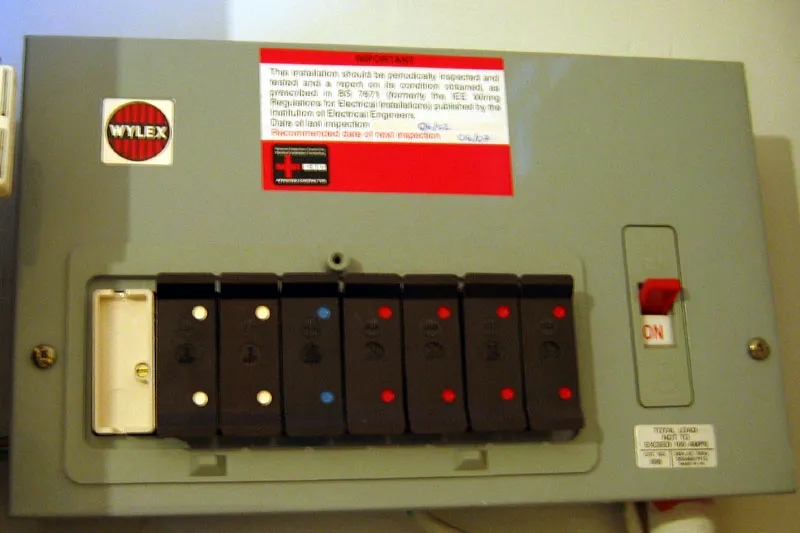
Consumer-unit capacity is one of the most common practical constraints. A heat-pump installation may need one or more ways for the outdoor unit, cylinder or controls, and the existing board may have no spare ways or no physical space for additional devices.
Where space exists, the question is not only quantity but type. The manufacturer’s instructions and BS 7671 will determine the correct protective device and residual current device arrangement. An inverter-driven heat pump should not be assumed to suit whatever RCD is already fitted. Where the existing consumer unit is an older fusebox without RCD protection, or a board with limited ways, an upgrade may be the more sensible route than attempting to overcrowd the enclosure.
This is also the moment to consider whether the consumer unit has been designed for the home’s modern loads. A board that was adequate before the heat pump, EV charger or garden supply arrived may no longer provide a comfortable margin. The objective is not to specify an unnecessarily large board, but to ensure the installation has suitable protection, isolation and space for the equipment actually being connected.
Earthing, bonding and the wider installation
Main protective bonding to incoming metallic services should be present and in good condition. Heat-pump pipework does not remove the need for circuit protective conductors, nor does bonding compensate for a poor earthing arrangement. If the property has had extensions, a new kitchen or a garden room added over the years, the earthing and bonding may not reflect the current layout.
An electrician assessing the project should also consider the condition of the existing installation. A heat pump is a long-term appliance, and connecting it to a distribution board with signs of overheating, loose terminations or outdated protection is poor value even if it appears to work on the day.
Practical questions to ask before signing
- Has maximum demand been calculated with the heat pump and the home’s existing significant loads taken into account?
- Has the incoming supply rating and earthing arrangement been recorded?
- Which circuits will be dedicated to the heat pump, cylinder and controls?
- Is there space in the consumer unit for the required protective devices, and is the existing RCD arrangement suitable?
- Where will the outdoor isolator be positioned, and how will the cable be routed and protected?
- Are the cylinder’s immersion heater and backup element included in the electrical scope?
- Will the electrical work be itemised separately in the quotation?
- Who will coordinate any DNO supply upgrade, and how will that affect the programme?
- Will the work be certified and, where required, notified under Building Regulations?
A measured conclusion
Heat pumps can be an effective part of a UK home’s heating strategy, but the electrical questions should not be left to installation week. A short period of due diligence before the quote is accepted can clarify the true scope, reduce the risk of provisional sums becoming unexpected variations and give the installer a clearer brief.
Homeowners should ask for the electrical assumptions in writing and ensure that the proposed work is designed and certified by a competent electrician. Where the consumer unit, supply capacity or earthing arrangement needs attention, it is better to plan that work alongside the heat-pump installation than to discover it once the unit is on the wall.