Before the Engineer Knocks: A Homeowner's Briefing for Smart Meter Installation Day
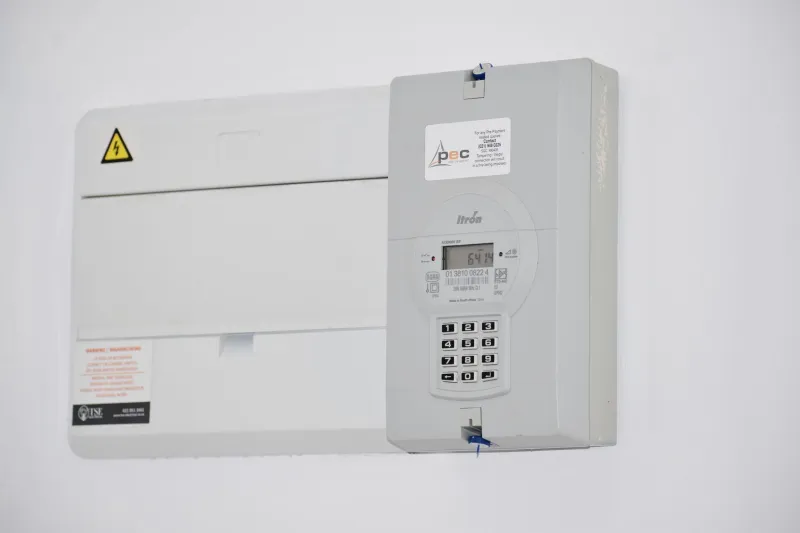
Smart meter appointments have become a routine fixture of modern home ownership, yet they are frequently misunderstood. Householders often assume that the visit constitutes a general check-up on the electrical installation, and are surprised when the engineer confines their attention to the meter, its tails and the immediate supply arrangements. Understanding the boundaries of the task in advance prevents disappointment, avoids awkward conversations on the doorstep, and ensures the appointment runs smoothly.
What the Appointment Is Designed to Achieve
A smart meter installation is a discrete engineering operation on the supply equipment. The engineer will isolate the supply, remove the existing meter, fit the new meter and communications hub, carry out commissioning tests, and reseal the equipment. In a straightforward property this occupies roughly forty-five minutes to an hour and a half; awkward meter positions, tired tails or a lack of working space can extend it considerably.
The operative works to a defined scope laid down by the supplier and regulated by the relevant industry codes. Their responsibility is the safe and correct functioning of the metering equipment. They are not engaged to survey the fixed wiring of the property, and their training and insurance cover reflect that distinction.
Preparing the Space and the Household
A little preparation goes a long way. Clear at least a metre of unobstructed floor in front of both the meter and the consumer unit. Cupboards beneath stairs and meter boxes tucked behind stored goods are common causes of delay. If the meter sits in a cellar, an outbuilding or an external cabinet, confirm that the route is accessible and that any keys are to hand.
It is worth remembering that the supply will be interrupted for the duration. Anyone working from home, anyone reliant on medical equipment, and any household with a burglar alarm or timer-dependent heating should be briefed beforehand. Pets should be secured, and parking arranged if the meter position is not visible from the road.
Meter Tails, Isolators and the Consumer Unit
The meter tails run from the meter to the consumer unit. Where they are unusually long, undersized for the load, or visibly deteriorated, the engineer may decline to reconnect until the situation is addressed, or may fit an isolator to provide a means of isolation for future work. An isolator fitted at this stage is a convenience, not an upgrade: it does not alter the age, capacity or condition of the consumer unit behind it.
Householders sometimes hope that the visit will resolve a longstanding nuisance, such as a board that trips whenever the kettle and the tumble dryer run together. It will not. Discrimination problems, overloaded circuits and tired protective devices are matters for the installation, and require a competent electrician working to the wiring regulations.
Earthing and Main Protective Bonding in Brief
The engineer will check that a means of earthing is present and sound, and will look for main protective bonding conductors connected to the incoming metallic services, principally gas and water, where these are visible and accessible. Bonding is a safety measure that keeps simultaneously touchable metalwork at a similar potential during a fault, and its absence is a genuine defect rather than a technicality.
Where bonding is missing, undersized or not visible, the engineer may record the observation and advise the householder. Remedial work of that kind sits outside the meter appointment. Asking an operative to route a bonding conductor through a finished kitchen, beneath a sealed floor or behind fitted cabinetry is not a reasonable expectation, and a refusal is not obstinacy.
What the Visit Genuinely Does Not Prove
A completed installation says nothing about the condition of the circuits beyond the meter. It is not an Electrical Installation Condition Report. An EICR is a documented inspection and testing regime covering insulation resistance, earth fault loop impedance, protective conductor continuity, polarity, ring final circuit continuity and the operation of residual current devices, with observations codified and scheduled. The meter appointment tests the meter and the supply arrangements; it does not test the installation.
Equally, the absence of comment on the day should not be read as a clean bill of health. An engineer with a scheduled appointment and a defined task has neither the time nor the remit to investigate flickering lights, a socket that has begun to discolour, a circuit that trips in damp weather, or the ageing rubber and lead-sheathed cables still present in some interwar and postwar properties. These are indicators that merit investigation by a qualified electrician, irrespective of how the meter appointment went.
If a Concern Is Raised on the Day
Ask the engineer to describe precisely what has been observed and where. Request that the observation is recorded on the job sheet or paperwork, and keep a copy. It is helpful to establish whether the concern sits with the supply equipment, in which case the distribution network operator may have a role, or with the installation, which is the householder's responsibility.
With that information in hand, the sensible course is to instruct a competent electrician to examine the specific point raised. Where the concern is broad, or the property's inspection history is unknown, a full condition report is the more measured response than a series of speculative repairs.
When a Condition Report Is the Better Instrument
An EICR is generally advisable where the property has not been inspected within ten years, where its history is undocumented, where it has recently changed hands, or where significant new loads such as an electric vehicle charge point or a heat pump are planned. Landlords have specific duties that call for inspection at defined intervals. If any of these circumstances apply, arrange the report independently of the meter appointment rather than hoping the two can be combined.
A smart meter delivers better information about consumption. It does not deliver assurance about the wiring that carries that consumption. Treat installation day as one useful data point, prepare the access properly, and reserve questions about the installation itself for the electrician who is qualified, and insured, to answer them.